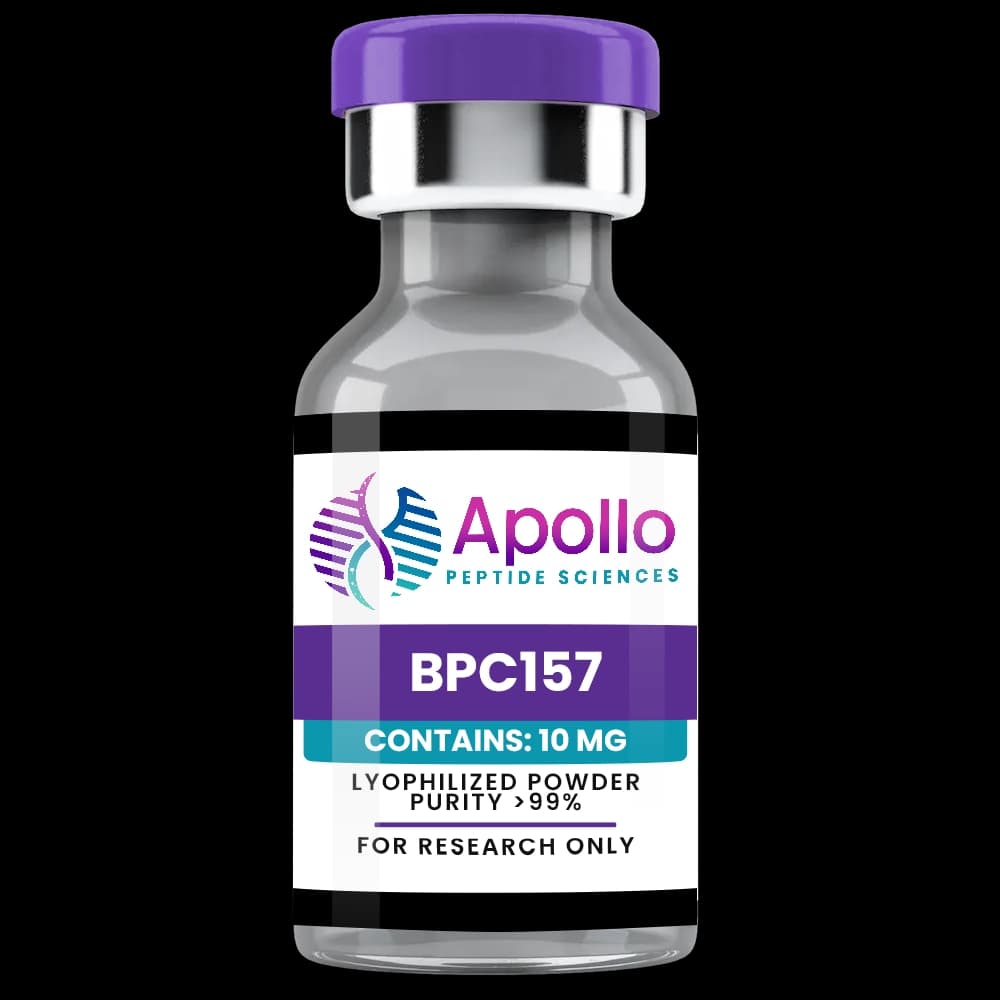
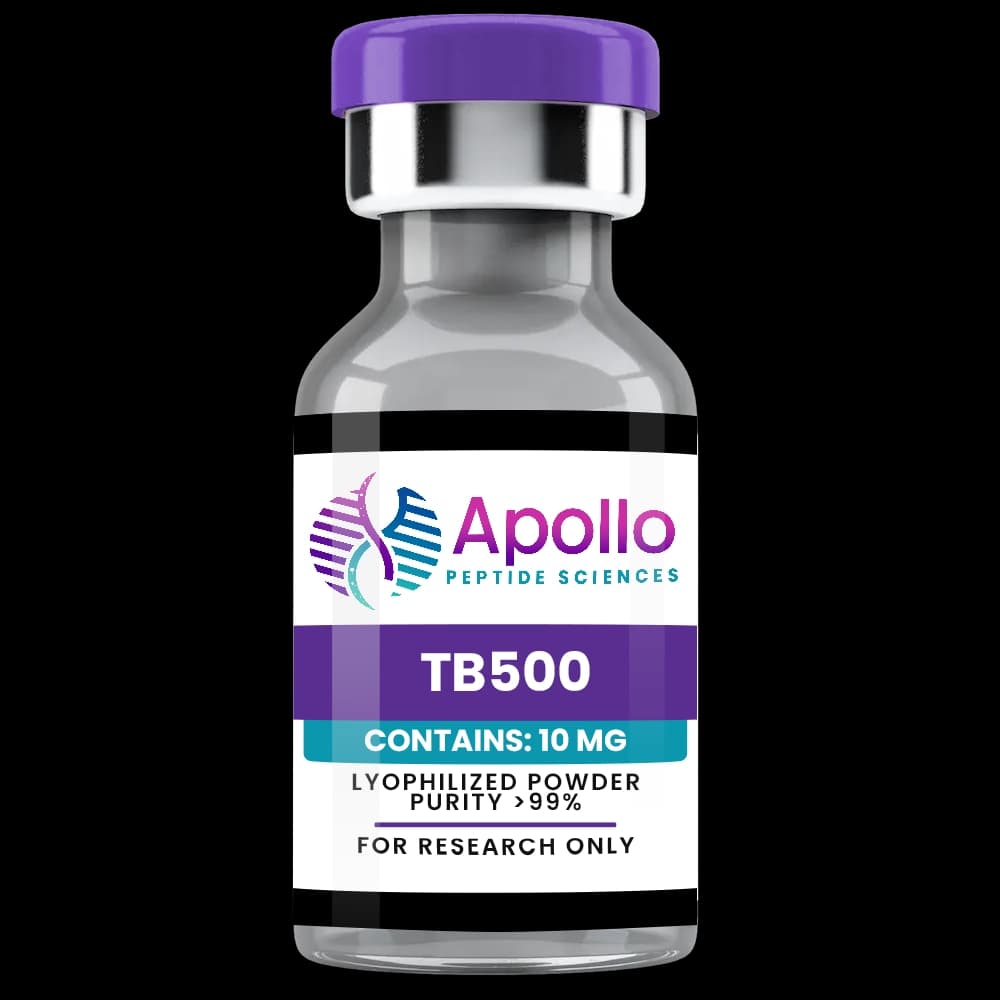
TB-500
Systemic Tissue Regeneration
Thymosin Beta-4 analogue that travels systemically to repair tissue throughout the body. Unmatched for flexibility, range of motion, and full-body recovery.
Suggested Protocol
Loading phase: 2–2.5mg twice per week for 4–6 weeks. Maintenance: 2–2.5mg every 2 weeks. SubQ injection — systemic distribution means injection site is not critical. Often cycled 8 weeks on, 4 weeks off.
43
Amino Acids
Systemic
Distribution
~6 days
Half-Life
Repair Targets
The Peptide That Travels to Every Injury Site — Without You Having to Inject Into Each One
TB-500 is a synthetic analogue of Thymosin Beta-4, a naturally occurring 43 amino acid protein found in virtually every cell in the body. Where BPC-157 excels at localized healing, TB-500's defining characteristic is its ability to travel systemically — reaching injury sites throughout the body through the bloodstream rather than requiring local injection.
The mechanism centers on actin regulation. TB-500 upregulates actin expression and promotes cell migration to injury sites, accelerating the formation of new blood vessels and muscle fibers while reducing inflammation across all tissue types simultaneously. This systemic reach makes it uniquely valuable for athletes and individuals with multiple concurrent injuries or areas of chronic inflammation.
Research has demonstrated TB-500's effects across a remarkable range of tissue types: cardiac muscle regeneration, tendon and ligament healing, skin wound repair, corneal tissue recovery, and bone healing — all through the same systemic distribution mechanism. This breadth of application is unmatched in the peptide category.
For physique development, TB-500 addresses the full-body recovery limitation that training intensity creates — enabling higher frequency and volume by reducing the cumulative structural stress that inevitably limits training progression. Combined with BPC-157, the two peptides create complementary local and systemic repair coverage.
What Makes It Different
Systemic Distribution: Why TB-500 Reaches Injuries That Local Injection Can't
Most healing peptides work locally — you inject near the injury and that's where the effects concentrate. TB-500 breaks this rule entirely. As a synthetic analogue of Thymosin Beta-4, it distributes through the bloodstream to injured tissue throughout the body, regardless of injection site. This matters most for athletes with multiple concurrent issues — a shoulder issue, an overused knee, and general systemic inflammation can all be addressed from a single abdominal SubQ injection.
The Actin Mechanism
How Actin Sequestration Moves Repair Cells to Where They're Needed
TB-500's mechanism centers on actin, a structural protein found in every cell. By upregulating actin expression and sequestering G-actin (the monomeric form), TB-500 promotes cell migration — specifically, it directs repair cells, growth factors, and new blood vessel formation toward sites of damage. This isn't just anti-inflammatory: it actively recruits the biological machinery of repair and routes it to injured tissue, accelerating the structural repair process significantly.
BPC-157 vs. TB-500
Local Precision vs. Systemic Coverage — Why the Best Protocols Use Both
BPC-157 is exceptional at healing specific, targeted areas — particularly gut lining, tendons, and acute injury sites when injected locally. TB-500 is exceptional at systemic, full-body recovery — reaching all tissues via bloodstream distribution. Together, they create complementary coverage: BPC-157 handles the precise, acute repair; TB-500 handles the broader, systemic inflammatory burden and multi-site recovery that every hard-training athlete accumulates. Most serious recovery protocols use both simultaneously.
Key Benefits
Systemic tissue repair — heals multiple injury sites from a single injection
Dramatically improves flexibility and range of motion within weeks
Accelerates recovery from muscle tears, sprains, and overuse injuries
Reduces chronic inflammation throughout the body simultaneously
Promotes new blood vessel formation to all areas of damaged tissue
Enhances hair growth and skin repair as secondary benefits
Enables higher training frequency by accelerating structural recovery
Synergizes powerfully with BPC-157 for complete recovery coverage
Full Protocol
Loading phase: 2–2.5mg twice per week for 4–6 weeks. Maintenance: 2–2.5mg every 2 weeks. SubQ injection — systemic distribution means injection site is not critical. Often cycled 8 weeks on, 4 weeks off.
Best Stacked With