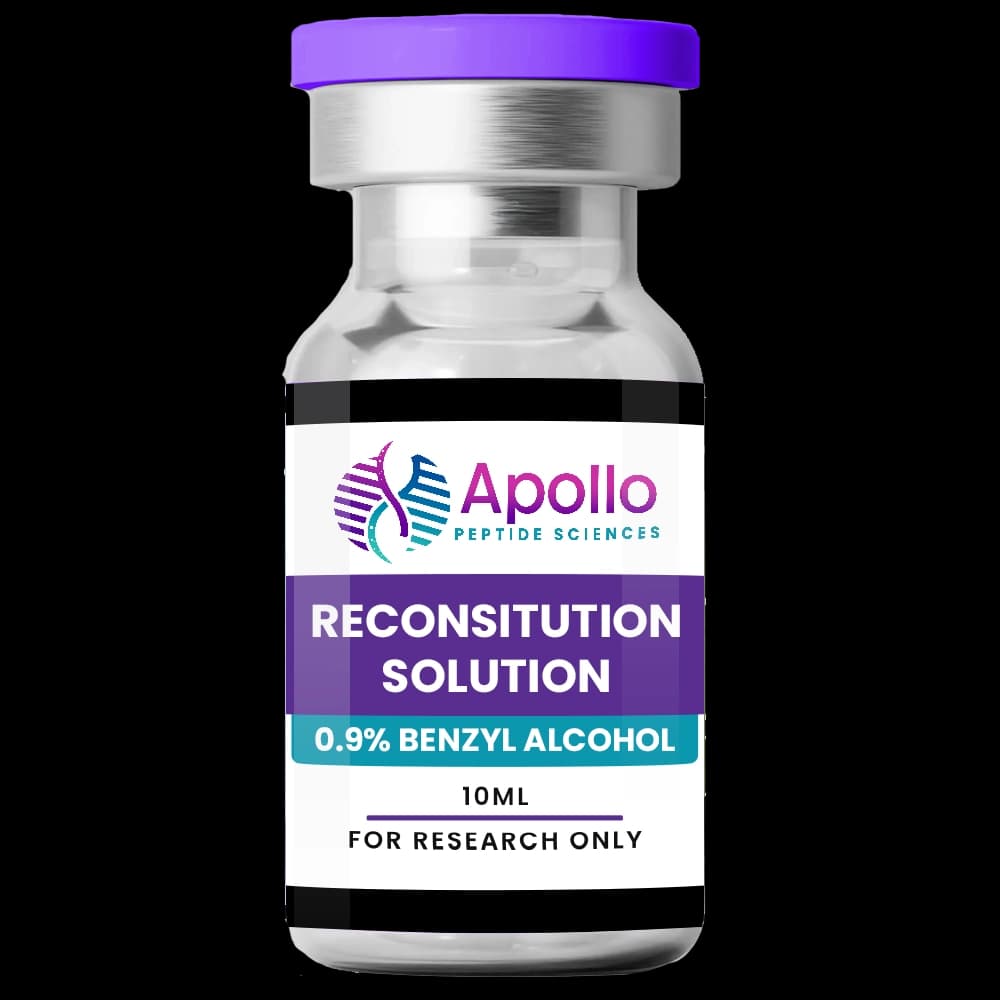
Bacteriostatic Water 10ml
Essential Peptide Reconstitution Solution
The non-negotiable companion for every injectable peptide. Pharmaceutical-grade 0.9% benzyl alcohol solution that reconstitutes lyophilized peptides and preserves them across multiple uses.
Starting From
$9.99
Sold By
Apollo Peptide Sciences
Suggested Protocol
Add 1–2ml of bacteriostatic water per 5mg peptide vial as a starting point — adjust volume based on desired injection concentration. Use a clean alcohol-wiped septum before each draw. Inject the water slowly down the inside of the peptide vial wall to avoid disrupting the lyophilized powder. Swirl gently — do not shake. Store reconstituted vials refrigerated at 2–8°C.
0.9% BnOH
Preservative
28+ days
Sterile Life
10 ml
Volume
Repair Targets
The One Thing Every Injectable Peptide Protocol Has in Common
Bacteriostatic Water is the foundational tool that makes every injectable peptide protocol possible. Before any lyophilized (freeze-dried) peptide — semaglutide, tirzepatide, BPC-157, CJC-1295/Ipamorelin, or any other compound in this catalog — can be administered, it must be reconstituted with a sterile, preservative-containing solution. Bacteriostatic Water is the pharmaceutical standard for exactly this purpose.
The critical distinction from plain sterile water is the 0.9% benzyl alcohol content. This bacteriostatic preservative prevents microbial growth in the vial between uses, maintaining sterility across multiple draws over 28+ days when stored correctly. Standard water for injection offers no such protection — each use risks contaminating the entire vial. For multi-dose protocols involving weekly or daily administration, bacteriostatic water is not optional.
Pharmaceutical-grade manufacture ensures the absence of pyrogens, endotoxins, and particulate contamination that would compromise research integrity or safety. Apollo Peptide Sciences supplies this in a 10ml sterile vial — sufficient to reconstitute multiple peptide vials with careful technique. Each 10ml vial allows precise dosing calculations by adjusting the volume added to achieve the desired concentration per unit of the reconstituted compound.
No serious peptide research protocol is complete without it. Whether working with GLP-1 compounds requiring weekly dosing over months-long protocols, or short-cycle performance peptides dosed multiple times per day, bacteriostatic water ensures every injection draws from a sterile, stable, accurately concentrated solution. Add one to every order — it is the one consumable no protocol can function without.
Why Not Plain Sterile Water
0.9% Benzyl Alcohol: The Difference Between a Safe Vial and a Contaminated One
Standard water for injection is sterile when sealed — but the moment you pierce the septum and draw a dose, you introduce the risk of microbial contamination. Plain sterile water offers no protection against bacterial growth in the vial between uses. Bacteriostatic water's 0.9% benzyl alcohol content actively inhibits microbial growth, keeping every draw from a reconstituted vial as clean as the first — for up to 28 days under proper refrigeration. For any multi-dose protocol, this distinction isn't minor: it's the difference between a safe protocol and a risky one.
Reconstitution Math
How the Volume You Add Determines the Dose You Draw — Getting It Right Every Time
The amount of bacteriostatic water you add to a peptide vial determines your working concentration and, consequently, every dose you draw. For a 5mg peptide vial: add 1ml of BAC water = 5mg/ml (1mg per 0.2ml draw). Add 2ml = 2.5mg/ml (1mg per 0.4ml draw). The math is simple but the stakes are high — imprecise reconstitution means imprecise dosing across every injection for weeks. Most researchers find 1–2ml per 5mg vial a practical starting point, adjusted to keep injection volumes manageable.
Storage & Stability
28 Days Properly Refrigerated: What Peptide Stability Actually Requires
Reconstituted peptides are stable for up to 28 days when refrigerated at 2–8°C — but only when bacteriostatic water is used for reconstitution. Room temperature storage, repeated freeze-thaw cycles, or exposure to light all accelerate peptide degradation. Best practice: reconstitute one vial at a time, label with the reconstitution date, refrigerate immediately, and keep away from the door (where temperature fluctuates). Lyophilized (unreconstituted) peptides are far more stable and should be stored at room temperature or in the freezer until needed.
Key Benefits
Preserves reconstituted peptides across 28+ days of multi-dose use
0.9% benzyl alcohol content inhibits bacterial growth between draws
Pharmaceutical-grade manufacture — pyrogen and endotoxin tested
Compatible with all lyophilized injectable peptides in this catalog
Enables precise concentration calculation by adjusting reconstitution volume
Maintains chemical stability of reconstituted peptides under refrigeration
Single 10ml vial reconstitutes multiple peptide vials efficiently
The non-negotiable foundation for every injectable peptide protocol
Full Protocol
Add 1–2ml of bacteriostatic water per 5mg peptide vial as a starting point — adjust volume based on desired injection concentration. Use a clean alcohol-wiped septum before each draw. Inject the water slowly down the inside of the peptide vial wall to avoid disrupting the lyophilized powder. Swirl gently — do not shake. Store reconstituted vials refrigerated at 2–8°C.