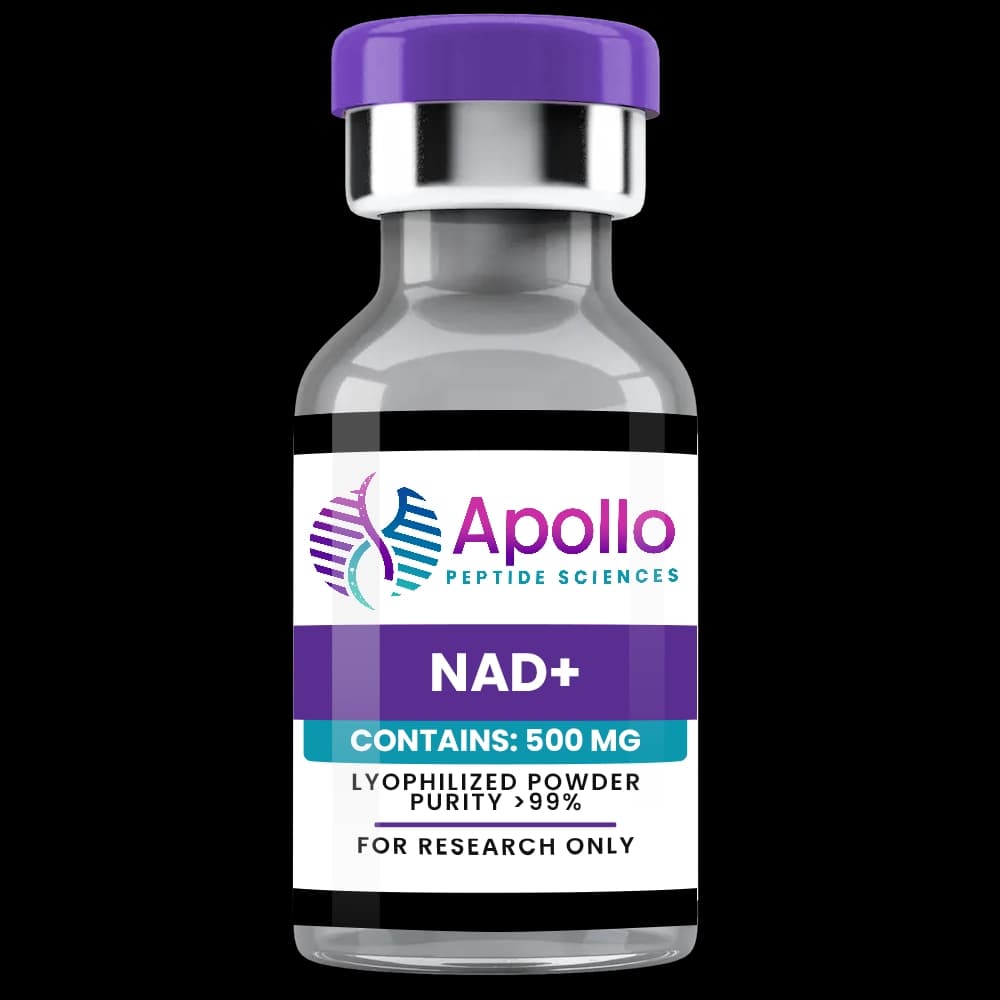
NAD+
Cellular Energy & Longevity Coenzyme
Nicotinamide adenine dinucleotide — the master coenzyme driving cellular energy production, DNA repair, and sirtuin activation. Critical for metabolic health and biological age reversal.
50%+
Age-Related Drop
SIRT1–7
Sirtuins
250–500 mg
Per Session
Suggested Protocol
IV or SubQ injection: 250–500mg per session, 2–5× per week for initial loading, then 1–2× per week for maintenance. IV administration provides the most rapid increase in circulating NAD+. SubQ is more practical for ongoing research protocols. Flush sensation with IV administration is normal and transient.
The Currency Every Cell in Your Body Runs On — and What Happens When It Runs Out
NAD+ (Nicotinamide Adenine Dinucleotide) is not a peptide in the classical sense but the master coenzyme present in every cell in the body, serving as the essential cofactor for hundreds of metabolic reactions and representing one of the most extensively researched longevity interventions in modern biology.
NAD+ operates at the core of cellular energy metabolism — it is the electron carrier that drives the mitochondrial electron transport chain, converting nutrients into ATP (cellular fuel). As NAD+ levels decline with age (by 50% or more between youth and middle age in many tissues), cellular energy production becomes progressively impaired — contributing to fatigue, cognitive decline, metabolic dysfunction, and the hallmarks of biological aging.
Beyond energy metabolism, NAD+ serves as the substrate for sirtuins (SIRT1–7) — the "longevity proteins" that regulate gene expression in response to cellular stress, control DNA repair, modulate inflammation, and mediate many of the life-extending benefits associated with caloric restriction and exercise. NAD+ is also consumed by PARP enzymes during DNA damage repair — creating a competitive demand on NAD+ availability during cellular stress.
Direct NAD+ supplementation bypasses the metabolic steps required to convert oral NMN or NR into NAD+, delivering the coenzyme directly for research applications. Apollo's 500mg vial represents exceptional value for NAD+ research protocols.
Why NAD+ Declines
The 50%+ Drop Between Youth and Middle Age — What Causes It and What It Costs
NAD+ levels in most tissues drop by more than 50% between a person's 20s and 50s. This decline isn't a single-cause phenomenon — it reflects increased NAD+ consumption (more DNA damage with age means more PARP enzyme activity consuming NAD+ for repair), reduced biosynthesis efficiency, and increased activity of CD38, an enzyme that degrades NAD+. The cost of this decline is measurable: reduced mitochondrial efficiency (less ATP per unit of fuel), impaired DNA repair capacity (damaged DNA accumulates faster than it's fixed), and diminished sirtuin activity (the longevity proteins that regulate cellular health go quiet without adequate NAD+ to fuel them).
Sirtuin Biology
SIRT1-7: The Longevity Proteins That Only Work When NAD+ Is Abundant
Sirtuins are a family of seven proteins (SIRT1–7) that regulate gene expression in response to cellular stress — controlling DNA repair, inflammation, mitochondrial biogenesis, and metabolic efficiency. They're described as "longevity proteins" because their activity is strongly associated with lifespan extension in multiple model organisms. The critical dependency: sirtuins are NAD+-dependent enzymes. They cannot function without adequate NAD+ as a substrate. This means that as NAD+ declines with age, sirtuin activity declines proportionally — the cellular maintenance and stress-response machinery that keeps cells healthy progressively shuts down. Restoring NAD+ is the key to restoring sirtuin function.
IV vs. SubQ Delivery
Two Routes, Different Speed Profiles — Which One Fits Your Research Protocol
IV NAD+ administration produces the most rapid increase in plasma and cellular NAD+ levels — measurable within hours, with the familiar flush sensation (warmth, tingling) indicating rapid systemic distribution. It's the format used in clinical NAD+ IV therapy clinics. SubQ injection is slower to peak but more practical for ongoing protocols — no clinic required, manageable at home, and suitable for 2–5× weekly schedules that maintain elevated NAD+ between sessions. For researchers seeking an acute "reset" experience, IV is preferred. For sustained long-term NAD+ optimization as part of an ongoing anti-aging protocol, SubQ provides the practicality needed for consistent, frequent administration.
Key Benefits
Restores declining NAD+ levels — drops 50%+ between youth and middle age
Activates sirtuin longevity proteins (SIRT1–7) for comprehensive anti-aging effects
Enhances mitochondrial efficiency and cellular energy production
Supports DNA damage repair via PARP enzyme activity
Improves cognitive function and mental clarity via brain energy metabolism
Modulates inflammation through sirtuin-regulated gene expression
Synergizes with exercise — exercise increases NAD+ demand and utilization
Direct NAD+ bypasses metabolic conversion steps required with oral precursors
Full Protocol
IV or SubQ injection: 250–500mg per session, 2–5× per week for initial loading, then 1–2× per week for maintenance. IV administration provides the most rapid increase in circulating NAD+. SubQ is more practical for ongoing research protocols. Flush sensation with IV administration is normal and transient.